Core Design Specifications
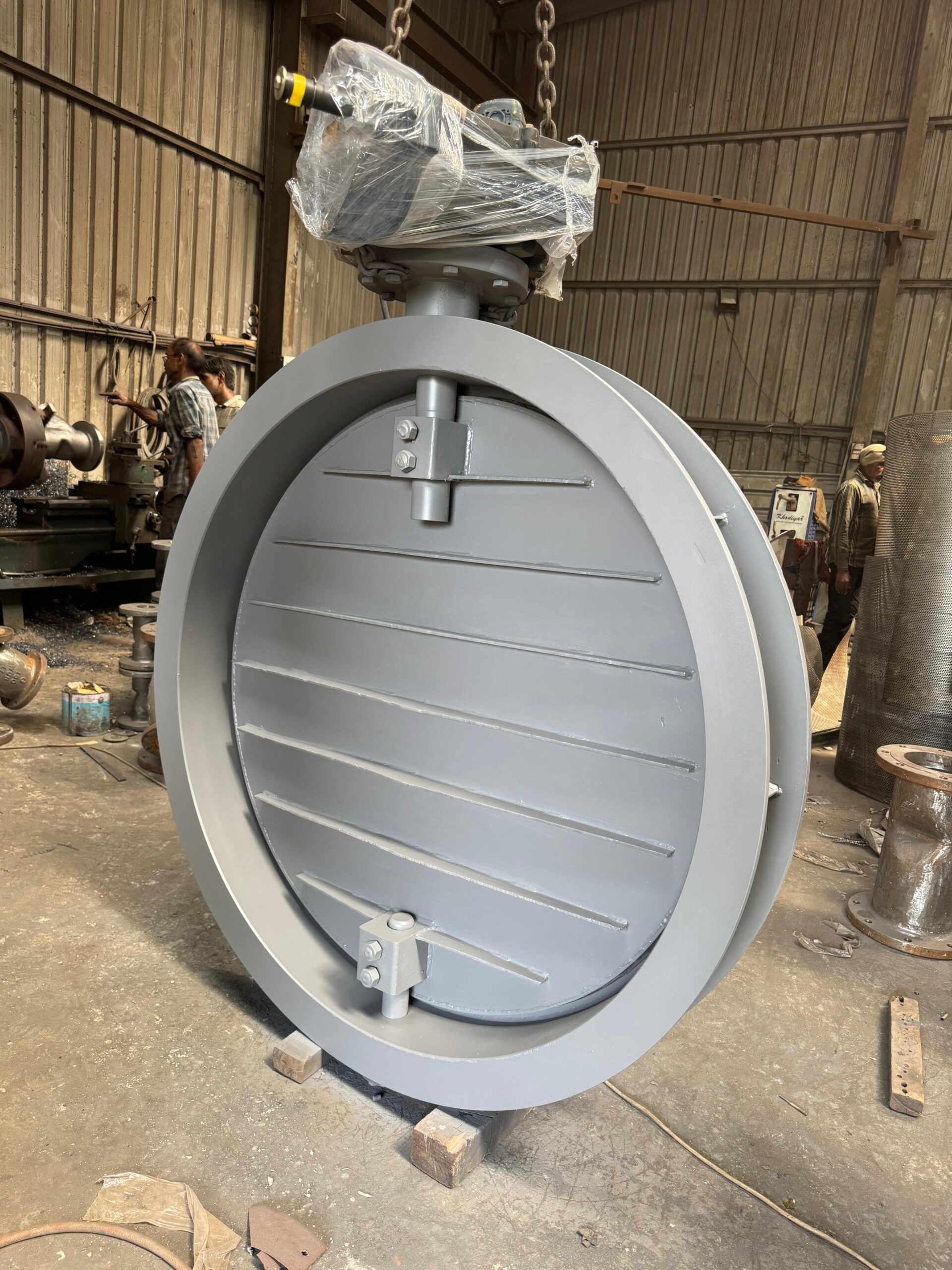
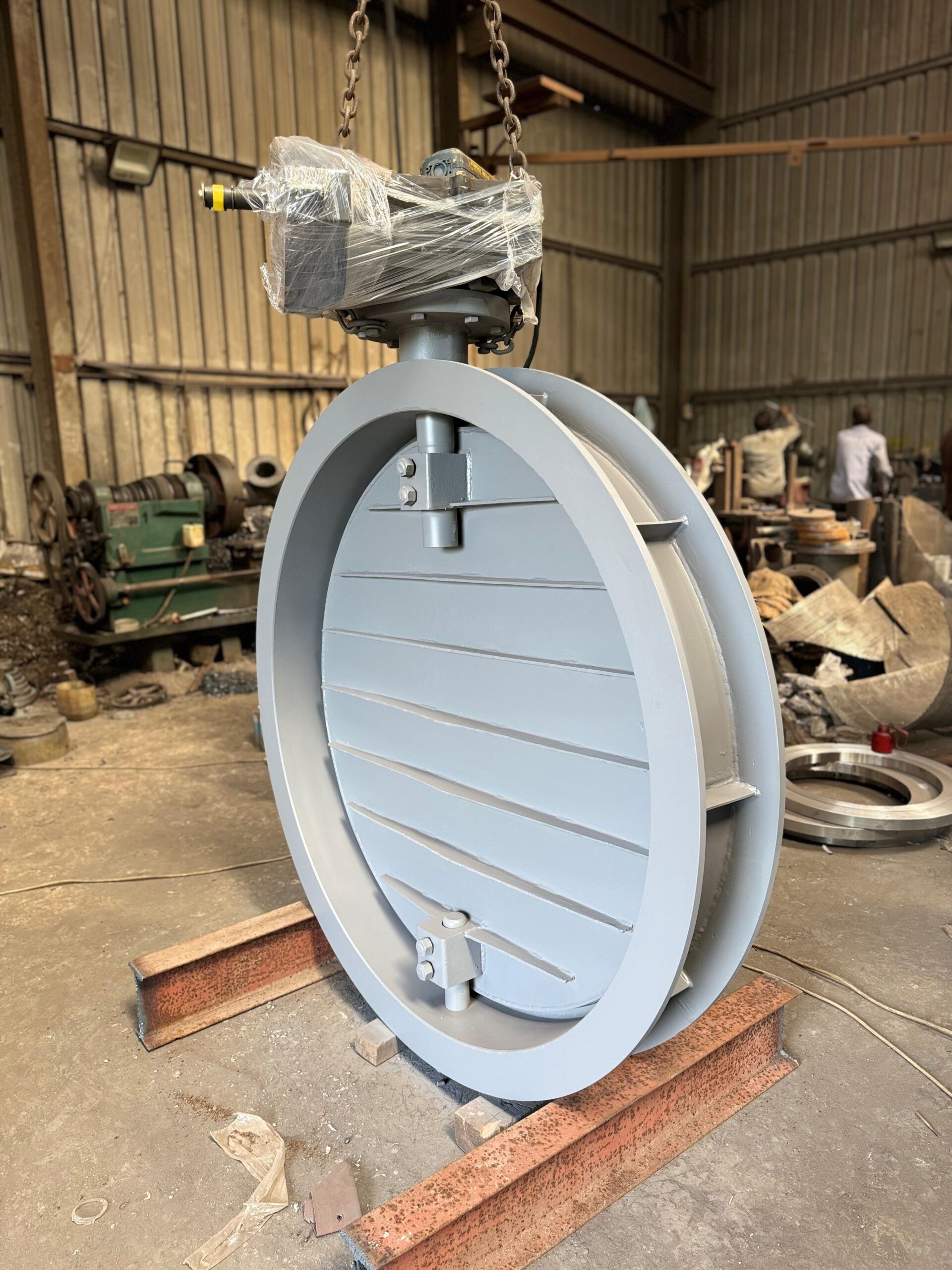
Body Type: Common configurations include Wafer (sandwiched between flanges), Lug (threaded inserts for end-of-line service), and Double-Flanged (integral flanges for heavy-duty use).
Disc Design:
Concentric (Zero Offset): The stem passes through the centre of the disc and seat; ideal for low-pressure, non-critical applications.
Double Offset (High Performance): Stem is offset from the seat and body centreline to reduce friction and wear.
Triple Offset: Incorporates a third angular offset for bubble-tight sealing in high-pressure/temperature steam or chemical services.
Size Range: Typically available from DN40 (1.5″) to DN3800 (120″) or larger.
Pressure Ratings: Standard ratings include PN6, PN10, PN16, PN20, and ASME Classes 150, 300, and 600.
Material Specifications (MOC)
Materials are selected based on the medium (liquid, gas, or slurry) and temperature:
Body: Cast Iron (IS 210 FG 200), Ductile Iron, Cast Carbon Steel (ASTM A216 WCB), or Stainless Steel (CF8M).
Disc: CF8 (SS304), CF8M (SS316), Aluminum Bronze, or Nylon-coated Ductile Iron.
Seat: Resilient materials like EPDM (standard water), Nitrile (oil/gas), PTFE/Viton (chemicals), or Metal-to-Metal for high-temperature service.
Stem: Often AISI 410, 304, or 316 stainless steel.
Operation and Testing
Actuation: Hand lever (up to 150/200mm), Worm gear (200mm and above), or Pneumatic/Electric actuators.
Leakage Class: Generally compliant with EN 12266-1 Rate A (zero leakage) or ANSI/FCI 70-2 Class VI.
Standard Tests: Hydrostatic Body Test (typically 1.5x working pressure) and Seat Leakage Test (1.1x working pressure).
For detailed dimensional data based on specific flange standards (ANSI B16.5 vs DIN PN16),


Reviews
There are no reviews yet.